

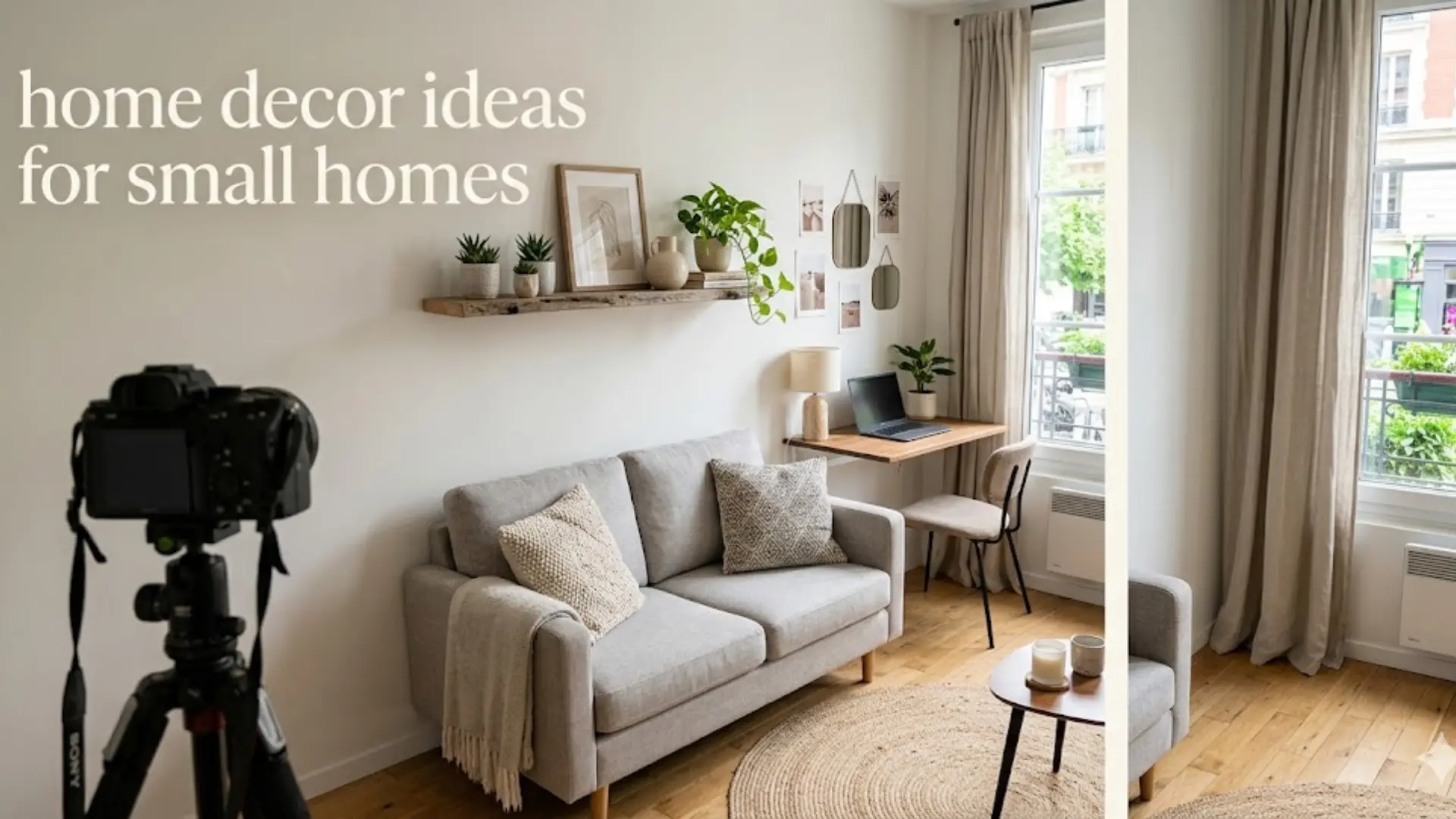
You rearrange the furniture for the third time and it still doesn’t feel right. The room isn’t cluttered exactly — but nothing sits the way it should. There’s a low-level friction every time you walk in, like the space is pushing back instead of welcoming you.
That feeling is more common than you’d think — and it’s almost never about the size of the room. After spending years testing what holds up in real compact homes versus what only looks good in magazine photos, the same truth keeps surfacing: the best home decor ideas for small homes aren’t about buying less or stripping everything back. They’re about making the right choices — and knowing which few changes carry the most visual weight.
This isn’t a list of quick fixes or vague inspiration. What follows is a practical breakdown of the layout strategies, colour decisions, furniture picks, and finishing touches that genuinely transform small spaces. Some of it will surprise you. A few of the most effective ideas cost nothing at all.
Whether you’re setting up a studio apartment for the first time, refreshing a small house, or just trying to make one difficult room finally work — there’s something in here that applies directly to your situation.
Why Small Homes Need a Completely Different Decor Approach
Decorating a small home isn’t just decorating a large home with less stuff. The rules actually shift. What makes a big living room feel warm and layered — a deep sectional, oversized rugs, heavy drapes, a gallery wall of small frames — will make a compact room feel suffocating. The scale is wrong. The visual noise is too high.
Small space interior design is built on a different foundation: proportion, light, and the intentional use of every surface available to you — including walls, ceilings, and the backs of doors. Once you start thinking in those terms, the decisions get much clearer.
The mistake almost everyone makes first
Pushing all the furniture against the walls. It feels logical — clear the centre, create space. In practice, it makes the room look like a waiting room. Furniture arranged this way has no relationship with itself; each piece just lines the perimeter and the room feels hollow rather than open.
Floating pieces away from walls — even 25 to 35 centimetres — creates visual breathing room. The gap signals space. The room doesn’t get bigger, but it stops feeling boxed in.
What proportion actually means in a small room
Every piece of furniture occupies two things: physical floor space and visual weight. A solid-base sofa that sits flush to the ground feels heavier than it is. The same sofa on slim timber legs feels lighter because you can see floor beneath it. That visible floor is what the brain reads as open space.
This is why proportion matters more than size. A smaller sofa on legs can make a room feel more open than a larger one that hugs the floor. The number on the tape measure isn’t the whole story.
Smart Layout Ideas: Plan the Room Before You Buy Anything
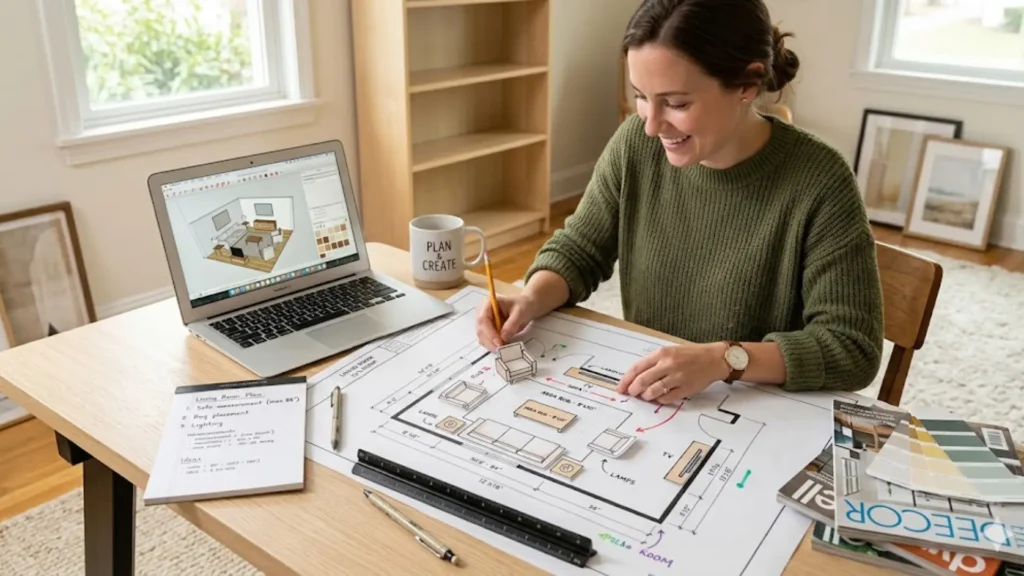
Most people shop first and arrange second. Flip that. Before anything enters the room, understand how people move through it, where natural light falls, and what the room actually needs to do. A layout that works with the room’s shape costs nothing and changes everything.
Zone your space — even in a studio
A studio apartment doesn’t have to feel like one room. Zones create structure without walls. Use a low bookshelf as a room divider between sleeping and living areas. Use a rug to anchor a seating zone. Use a change in lighting — a floor lamp in the corner versus overhead in the centre — to signal two different areas.
When each area has a clear identity and purpose, the whole flat feels more deliberate. That sense of intention is what makes a small space feel well-designed rather than cramped.
Symmetry makes order out of small spaces
Two matching bedside lamps. A pair of chairs flanking a small table. Shelves balanced on either side of a window. Symmetry doesn’t require expensive furniture — it just requires balance. And balance reads as calm, which is exactly the quality a small room needs more of.
What to actually measure before you shop
- Doorway and hallway width — large sofas often don’t fit through standard doors
- Floor clearance around beds and dining tables (60 cm minimum walkway)
- Ceiling height — determines how tall shelving and curtain drops should go
- Window position and light direction — affects which wall colour works best
- Existing furniture footprint — total square metres of floor already occupied
That last measurement is the one most people skip. Knowing exactly how much floor your current furniture takes up tells you immediately whether the problem is the room or the layout.
Colour and Light: The Cheapest Visual Transformation You Can Make
Paint is the single highest return-on-investment change available in any small home. A tin of paint costs less than most side tables and has more impact than almost any furniture swap. But the colour decisions that actually work in small rooms are more nuanced than ‘just keep it white.’
Warm and light — not simply white
A cool white in a north-facing room reads grey and flat by afternoon. What actually opens a small space is a warm, light tone — soft off-whites with yellow or pink undertones, pale warm greiges, dusty sage. These colours reflect light without the clinical coldness of a stark white and make rooms feel inhabited rather than sterile.
One technique worth knowing: colour drenching. Paint walls, skirting boards, door frames, and ceiling all the same shade. Removing the colour break between surfaces makes the eye read the room as one continuous, uninterrupted space. It’s a subtle move with a surprisingly large visual effect.
Dark walls — not always a mistake
A deep colour on one wall — navy, forest green, charcoal — creates apparent depth. The room appears to extend behind that wall rather than end there. This is counterintuitive but consistent across well-documented interior design practice. The conditions for it to work: opposite wall stays light, furniture stays mostly neutral, and at least one mirror is in the room.
Layering lights instead of relying on one source
A single overhead bulb is the enemy of cozy small room atmosphere. It flattens everything and creates hard shadows in corners. The fix is simple: layer your lighting. One overhead source, a floor lamp in a corner, task lighting on a desk or kitchen counter, and a low ambient source in the evening — a table lamp, candles, or LED strips behind a shelf.
Bulb temperature matters too. Warm white (2700K to 3000K) makes a room feel settled and lived-in. Cool white bulbs read clinical in small spaces and work against everything else you’re trying to achieve.
Mirrors: the right placement beats the right frame
One large mirror opposite or beside the main window reflects natural light deep into the room and reads visually as a second window. Leaning it slightly rather than mounting it flat catches more of the room in the reflection. Three small decorative mirrors on a wall achieve almost none of this effect. One well-positioned full-length mirror does more work than any collection of smaller ones.
Space-Saving Furniture That Looks Like It Was Always Meant to Be There
The space-saving furniture category has genuinely improved. The compromised aesthetic of fold-up beds and wobbly plastic stackables is largely behind us. The best multifunctional furniture today is designed so that the function is the secondary thing you notice — the first is that it looks right in the room.
Storage beds: the highest-value purchase in a small bedroom
A hydraulic-lift storage bed conceals the rough equivalent of a large wardrobe beneath the mattress. In a small bedroom, this single purchase can eliminate the need for additional storage furniture entirely, which opens the room up significantly. Add floating bedside shelves instead of traditional nightstands and you recover another 60 to 80 centimetres of floor on each side of the bed.
Ottoman coffee tables
A lift-top ottoman does three jobs at once: coffee table, storage container, and extra seating. In a compact living room, it replaces two or three separate pieces of furniture. Look for one with castors — the ability to roll it aside when you need open floor space is worth the slight premium, especially in rooms that serve multiple purposes throughout the day.
Nesting tables and folding chairs
Three nesting side tables take up the footprint of one. When guests arrive, you have three surfaces exactly where they’re needed. Folding dining chairs stored behind a door or in a hallway cupboard let you seat six people for dinner without that furniture living permanently in the room. Small homes can host well — it just takes a different kind of planning.
The leg rule — apply it to everything
Furniture on visible legs makes rooms feel open. The floor visible beneath a sofa, bed frame, or armchair signals available space to the eye. When comparing two otherwise identical pieces, the one on 12 to 15 centimetre timber or metal legs will always make the room feel less crowded. It’s a small physical detail with a consistent and measurable effect on how the whole space reads.
Going Vertical: The Dimension Most Small Homes Completely Ignore
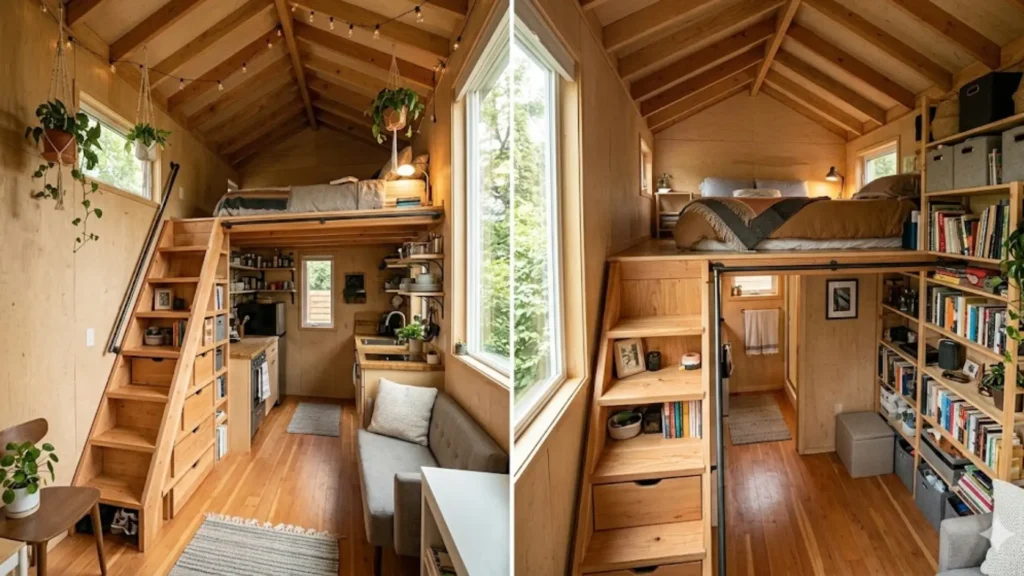
Floor space gets obsessive attention in small home planning. Wall space — and especially the vertical dimension from waist height to ceiling — is almost entirely wasted in most compact homes. Shifting storage, greenery, and even art onto walls frees up the floor without removing anything from the room.
Ceiling-height shelving
Shelves that run from about 30 centimetres below the ceiling down to mid-wall height draw the eye upward, which creates an impression of height, and deliver substantial storage without a single centimetre of floor footprint. For a look that feels curated rather than warehouse-like, vary what lives on the shelves: books lower down, a mix of books and objects in the middle section, mostly plants or decorative pieces near the top where the eye doesn’t scan closely.
Hanging plants and wall greenery
A trailing plant in a hanging planter near a window, a row of small terracotta pots on a floating kitchen shelf, an air plant mounted on a piece of driftwood — all of these bring life and texture into apartment decor without consuming any horizontal surface. Plants genuinely change how a space feels, not just how it looks. That’s worth noting as a separate benefit beyond the visual.
Pegboards as hardworking wall decor
A painted pegboard in the kitchen holds utensils, spice jars, and small pots. One in the entryway manages keys, bags, and post. In a home office corner it takes care of cables, notebooks, and chargers. They’re inexpensive, fully reconfigurable, and shift a surprising amount of clutter off every horizontal surface — which is where most small rooms quietly lose their sense of calm.
The one-large-art rule
One substantial piece of art — a large canvas, an oversized print, a framed map — creates a focal point that anchors the wall. Lots of small frames dotted around the same wall add visual noise that a small room cannot absorb well. When in doubt: fewer, larger, lower. Art hung at eye level, not picture-rail height, always reads better in compact spaces.
Room-by-Room Decor Ideas: Bedroom, Living Room & Kitchen
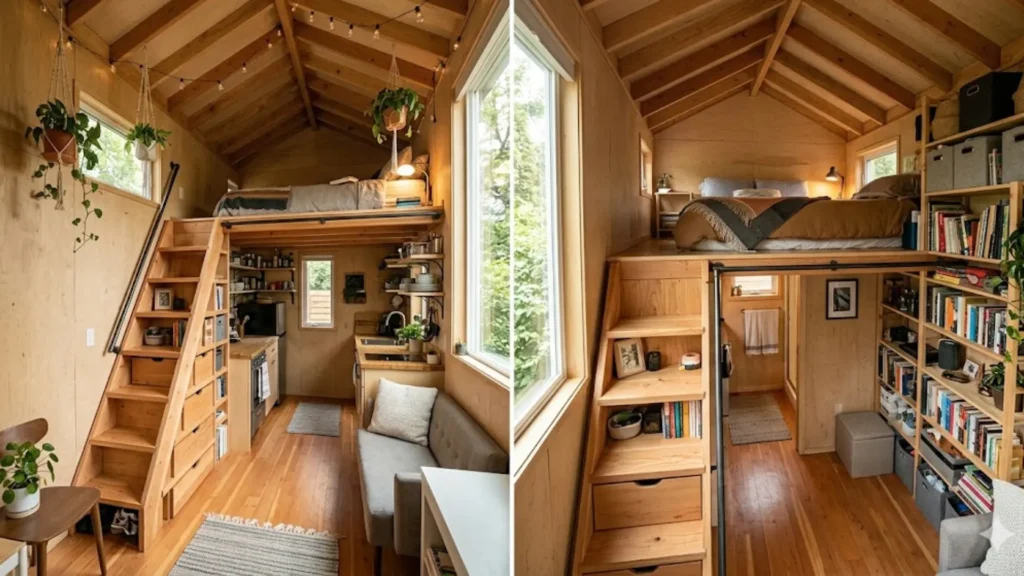
Generic decor advice applies everywhere and nowhere at the same time. The reality is that a small bedroom has completely different challenges from a small kitchen, and what works in one can be irrelevant or even counterproductive in the other. Here’s what actually helps in each space.
Small bedroom ideas
The bedroom has one job above all others: it needs to feel restful. Clutter kills that faster than almost anything else. Start by getting storage off the floor — a storage bed and floating shelves instead of a chest of drawers reclaims significant visual space. Keep the colour palette muted and consistent. One or two tones throughout — walls, bedding, curtains — creates a calm continuity that larger bedrooms don’t need as much.
Avoid matching bedroom sets. A coordinated bed, two nightstands, dresser, and wardrobe — even when each piece is modestly sized — creates visual heaviness that overwhelms a compact room. Mixing individual lighter pieces gives the room more air.
Small living room ideas
The living room carries the most pressure in a small home because it typically needs to do the most things: relax, entertain, sometimes work. The layout decision matters more here than in any other room. One sofa, one accent chair, and a small table will almost always feel more open than a matching three-piece suite. The eye needs somewhere to rest.
A rug that leaves 20 to 30 centimetres of floor visible around its edges frames the seating area without consuming the whole room. A coffee table on castors gives you flexibility for the room’s different uses throughout the day.
Small kitchen ideas
Kitchens in small homes suffer most from counter clutter. Every appliance left on the counter permanently is visual noise and lost workspace. Store what you use less than three times a week. Bring the rest out when it’s needed.
Open shelving on one wall — rather than upper cabinets with doors — makes a small kitchen feel less enclosed. The visual depth behind the shelf reads as space. Keeping those shelves edited and relatively consistent in colour (similar toned crockery, matching storage jars) means they become a feature rather than a source of chaos. Pendant lighting over the counter adds warmth and function without consuming any surface area.
What Not to Buy: The Decor Choices That Quietly Work Against You
Most home decor guides tell you what to add. This section is about what to leave out — because a few common purchases actively make small spaces feel worse, and it helps to know which ones before you spend the money.
- Matching bedroom sets. A full coordinated suite — bed, two nightstands, wardrobe, dresser — creates uniform visual weight that dominates a compact room. Individual pieces of varying height, material, and tone breathe better together.
- Oversized sofas. A sofa that fills more than two-thirds of the main wall in a living room leaves no room for the eye to move. Scale down one size and add an accent chair instead — you’ll fit more seating in the room and it will feel less blocked.
- Floor-length heavy curtains. They steal wall width and compress the window visually. Sheer linen panels hung from ceiling height — not the window frame — elongate the wall, flood the room with light even when drawn, and make the ceiling feel higher.
- Rugs that cover the whole floor. A rug that extends edge to edge removes the framing effect entirely. Leave floor visible around the perimeter. It defines the seating zone without consuming the room.
- Busy small-scale prints on large surfaces. A sofa or armchair in a detailed small-scale print creates visual noise that compounds in a small room. One or two textured neutrals — a ribbed cushion, a plain linen throw — read better than four competing patterns.
- Solid-base furniture at low height. A storage unit, coffee table, or bed base that sits flush with the floor blocks the eye from reading beneath it as open space. The floor disappears visually. Anything on visible legs restores that reading.
FAQs
How do I make a small room look bigger?
Use furniture on legs, float pieces away from walls, hang curtains from ceiling height, and place one large mirror beside the main window.
What colours work best in small homes?
Warm off-whites, pale greige, and soft sage. One dark feature wall adds depth — keep the other three walls light.
What furniture should I avoid in a small room?
Matching bedroom sets, solid-base sofas, oversized rugs, and floor-length heavy curtains — all make compact spaces feel smaller.
Can I decorate a small rental without permanent changes?
Yes. Removable wallpaper, tension rod curtains at ceiling height, freestanding shelves, and a large rug — zero holes in walls.
What is the single best upgrade for a small bedroom?
A storage bed plus floating bedside shelves. It removes the need for a chest of drawers and frees up 1–2 square metres of floor instantly.
Conclusion
The home decor ideas for small homes that actually hold up over time share a common quality: they respect the space for what it is. Not fighting the square footage, not hiding everything, not stripping back until the room has no character. Just making choices — deliberate, specific, considered choices — about what belongs and what doesn’t.
A small home done well doesn’t feel like a compromise. It feels precise. Like someone thought about it. That quality has nothing to do with budget and everything to do with attention. The most transformed compact spaces I’ve seen weren’t the ones with the most money spent. They were the ones where someone stopped tolerating a room that wasn’t working and started making decisions about it.
Pick one section from this guide. Find the one change that applies most directly to a room that’s been frustrating you. Try it this week. Small spaces respond quickly to the right move — and once you see what one good decision does, the next one usually becomes obvious on its own.
